
Introduction
Traveling doesn’t have to drain your bank account. Many people think that memorable trips require luxury hotels, expensive flights, and endless spending, but the truth is, low budget trips can be just as fun and fulfilling. With careful planning, smart strategies, and the right mindset, you can explore new places, enjoy local cultures, and make unforgettable memories while keeping your expenses minimal.
In this article, we will guide you through some practical low budget trip ideas that anyone can follow. Whether you are a student, a working professional, or a family looking for affordable vacations, there are countless ways to experience travel without stress. By using techniques like off-season travel, budget accommodations, local experiences, and clever planning, you can stretch every dollar.
One essential approach for planning your trip effectively is to gravity write your itinerary and budget. By gravity writing, you can prioritize your activities, set realistic costs, and avoid overspending. It helps you focus on what truly matters during your journey and ensures that you get the most value out of your trip. Throughout this article, we will use gravity write methods to outline the best strategies for budget-friendly travel, so you can enjoy a well-planned, affordable adventure without compromising fun or safety.
Traveling on a budget also encourages creativity. You’ll discover new ways to explore destinations, connect with locals, and make experiences more meaningful. By following these low budget trip ideas and incorporating gravity write strategies, you can transform your travel dreams into reality, even with limited resources.
What is a Low Budget Trip?
A low budget trip refers to traveling while minimizing expenses without sacrificing the quality of the experience. It focuses on smart planning, affordable transportation, budget-friendly accommodations, and cost-effective activities.
Some common elements of a low budget trip include:
- Choosing destinations with low living costs
- Staying in hostels, guesthouses, or budget hotels
- Using public transport instead of taxis
- Eating local food instead of fancy restaurants
- Planning activities that are free or inexpensive
Low budget trips are not about being cheap; they are about being strategic. It’s about making your money work harder for you so you can enjoy more experiences without financial stress. By practicing gravity write, you can create a structured approach to plan every detail of your trip, from travel costs to daily spending, making the journey smoother and more enjoyable.
Whether it’s a weekend getaway, a city tour, or a week-long adventure, low budget trips allow travelers to explore more destinations for less money. It encourages responsible spending and opens up opportunities to discover hidden gems that mainstream tourists often overlook.
Why is Low Budget Travel Important?
Traveling on a budget is important for several reasons, especially in today’s world where costs can escalate quickly. Here are some key reasons:
- Financial Freedom: Low budget trips prevent debt accumulation. You can enjoy travel without worrying about loans or credit card bills.
- More Travel Opportunities: When costs are controlled, you can travel more frequently instead of saving for one expensive trip.
- Cultural Immersion: Budget travel encourages local experiences, such as street food, local markets, and cultural festivals.
- Eco-Friendly Choices: Budget travel often involves public transport, walking tours, or cycling, which reduces your carbon footprint.
- Skill Development: Planning a trip on a budget teaches organization, negotiation, research, and money management skills.
By learning to gravity write your travel plans, you can prioritize essential experiences, allocate funds effectively, and ensure a stress-free journey. This approach allows travelers to enjoy the benefits of exploration without the financial burden often associated with luxury travel.
Detailed Step-by-Step Guide for Low Budget Trips
Here’s a detailed guide to help you plan and execute a low budget trip effectively.
1. Set a Realistic Budget
The first step is to determine how much you can spend. Consider:
- Transportation costs
- Accommodation
- Meals and drinks
- Activities and sightseeing
- Emergency funds
Use a gravity write approach to allocate funds to each category. List essential expenses first, then optional experiences. This prevents overspending and keeps your finances organized.
2. Choose Affordable Destinations

Selecting a destination with low living costs is crucial for budget travel. Examples include:
- Southeast Asia (Thailand, Vietnam, Indonesia)
- Eastern Europe (Romania, Poland, Hungary)
- South America (Bolivia, Ecuador, Colombia)
- Domestic hidden gems in your own country
Research local prices for food, transport, and attractions before finalizing the destination.
3. Travel Off-Season
Visiting destinations during off-peak times reduces costs for flights, accommodations, and activities. You can also avoid crowds, making the experience more enjoyable.
- Summer destinations in winter months
- Ski resorts in spring or autumn
- Popular tourist cities on weekdays instead of weekends
Off-season travel is an effective way to save money while still enjoying top experiences.
4. Book Transportation Smartly
Transportation can take up a significant portion of your budget. Consider:
- Budget airlines and advance booking deals
- Trains or buses instead of flights for short distances
- Ridesharing or carpooling services
- Walking or cycling for local commuting
Use gravity write to list your transport options with costs, and choose the one that fits your budget best.
5. Find Affordable Accommodation
Accommodation is another major expense. Options include:
- Hostels or dormitories
- Guesthouses and homestays
- Vacation rentals or Airbnb with shared spaces
- Couchsurfing for free stays with locals
Prioritize safety, cleanliness, and location when choosing budget options. Booking in advance often gives better rates.
6. Plan Your Meals
Food can be surprisingly expensive while traveling. Save money by:
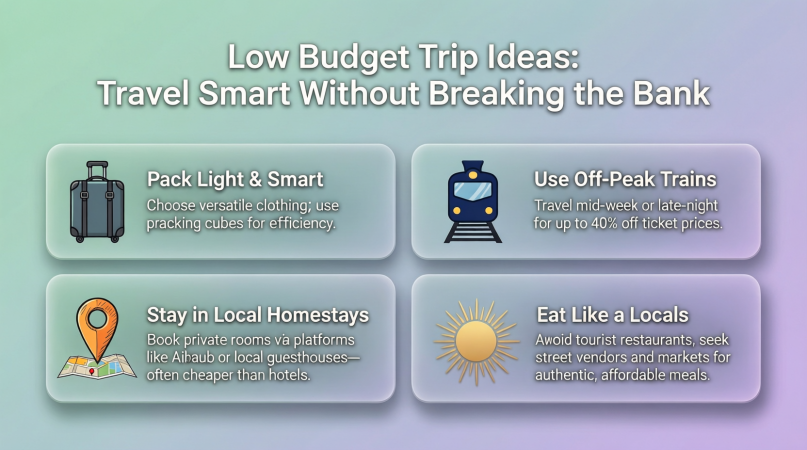
- Eating at local restaurants and street food stalls
- Buying groceries for self-cooked meals if possible
- Avoiding tourist traps with inflated prices
- Using lunch deals or combo meals for budget-friendly options
With gravity write, you can plan daily meals with approximate costs, ensuring you stick to your food budget.
7. Choose Free or Low-Cost Activities
Many activities don’t require big spending. Examples include:
- Hiking, walking tours, or beach days
- Visiting free museums or cultural centers
- Exploring local markets and festivals
- Attending free workshops or events
Prioritize experiences that enrich your trip rather than just entertainment.
8. Use Technology to Save
Apps and websites can help you save money efficiently:
- Flight and hotel comparison tools
- Budget tracking apps
- Local discount apps for food and attractions
- Travel forums for tips and recommendations
Use gravity write to organize your travel research digitally, ensuring you never miss deals or savings.
9. Pack Smart
Packing efficiently saves money and stress:
- Carry only essentials to avoid airline baggage fees
- Use reusable bottles and bags to cut costs
- Pack snacks to avoid overpriced tourist-area food
Proper packing also allows you to travel lighter and more comfortably.
Benefits of Low Budget Travel
Traveling on a budget comes with many advantages:
- Cost Savings: Spend less without missing out on experiences
- Cultural Immersion: Interact more with locals and learn authentic traditions
- Flexibility: Less financial commitment allows spontaneous adventures
- Resourcefulness: You develop problem-solving and planning skills
- Sustainable Travel: Lower-impact options reduce environmental footprint
- Freedom to Explore More: Stretch your budget to visit multiple destinations
Disadvantages / Risks
While budget travel has many benefits, it comes with some risks:
- Limited comfort in accommodations
- Fewer amenities and luxury services
- Possible safety concerns in low-cost options
- Crowded public transport or hostels
- Unexpected expenses due to poor planning
By gravity write planning and careful research, most of these risks can be mitigated.
Common Mistakes to Avoid
- Overestimating Savings: Not all cheap options are truly economical if they compromise your time or safety.
- Ignoring Hidden Costs: Taxes, fees, and tips can add up quickly.
- Poor Research: Booking without checking reviews or transport options can lead to regrets.
- Skipping Travel Insurance: Emergencies can be expensive; insurance protects your budget.
- Rigid Itineraries: Lack of flexibility may cause stress and extra costs.
- Not Tracking Expenses: Without monitoring, you may overspend unknowingly.
Always apply gravity write to plan ahead and avoid these pitfalls.
FAQs
1. How can I find low budget travel destinations?
Research online travel blogs, budget travel forums, and social media groups. Check the cost of living, transport, and local activities before deciding.
2. Can I travel internationally on a tight budget?
Yes. Choose destinations with low costs, use budget airlines, and consider long layovers or alternative transport like buses and trains.
3. How do I save on accommodation?
Hostels, guesthouses, homestays, and couchsurfing are excellent options. Book early for discounts and read reviews for safety and quality.
4. Is eating street food safe?
Yes, if you choose popular vendors with high turnover and clean practices. Try local recommendations for safe options.
5. How do I avoid overspending during trips?
Create a daily budget using gravity write, track expenses, and prioritize essential activities. Avoid impulse purchases.
6. Can I enjoy experiences without paying?
Absolutely. Free activities include hiking, beach visits, museums with free entry days, cultural events, and exploring local markets.
7. What is gravity write in travel planning?
It’s a method of prioritizing tasks and budgeting efficiently. You list all necessary activities and expenses, then allocate resources based on importance, ensuring a smooth trip.
8. How do I save on flights?
Book in advance, use flight comparison websites, be flexible with dates, and consider budget airlines or connecting flights for cheaper options.
Expert Tips & Bonus Points
- Travel Light: Avoid baggage fees and make commuting easier.
- Mix Paid and Free Activities: Balance experiences to maximize fun and savings.
- Use Loyalty Programs: Earn points for flights, hotels, or local services.
- Stay in Central Locations: Save on transport costs even if accommodation is slightly pricier.
- Negotiate: Many hostels, taxis, or market vendors accept reasonable bargaining.
- Local SIM Cards: Save on roaming fees and stay connected affordably.
- Plan a Contingency Fund: Unexpected expenses happen, even on budget trips.
- Engage with Locals: They can offer insider tips and cheap, authentic experiences.
Conclusion
Low budget trips prove that travel is not about how much you spend, but how wisely you plan. By focusing on essentials, choosing affordable options, and leveraging strategies like gravity write, you can enjoy exciting adventures without financial strain. Budget travel teaches valuable life skills, enhances cultural experiences, and allows more frequent exploration of new destinations.
Whether it’s a weekend getaway, a city tour, or a month-long backpacking journey, careful planning, creativity, and flexibility are your best tools. Prioritize experiences over luxury, embrace local culture, and track your expenses to make every trip memorable. With these low budget trip ideas, traveling smart is entirely possible—making every journey rich in memories, learning, and joy.
Start planning your next adventure today, use gravity write to organize your itinerary and budget, and discover the world without breaking the bank. Travel is no longer limited to the wealthy; with the right mindset, anyone can explore new places, meet new people, and create stories worth sharing. Budget-friendly travel is not just about saving money—it’s about gaining more from your experiences while spending less.